Good Chemistry: Green Tips for Better Health, from Planned Parenthood of Northern New England

Posts Tagged ‘PVC’

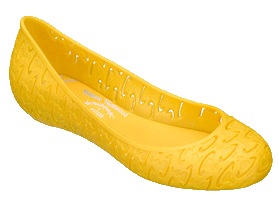
Looking Great and Staying Green with Jelly Shoes

jellyshoes
Remember Jelly shoes from the late 80’s/early 90’s?  I sure do! I loved them and wore them throughout my childhood.  So you can imagine how excited I was when I found these—the new and improved jellies! 

Original jellies were made out of PVC (the notorious “poison plastic”). But these new kicks by Melissa Plastic Dreams have an environmentally-friendly twist. 

Melissa Plastic Dreams uses sustainable development in order to provide these retro, plastic fashions to current plastic shoe connoisseurs everywhere without compromising the needs of inevitable future generations.   They are all made out of mono plastics that can be dismantled, recycled, and reused.  Even the processes with which these shoes are made involve treating and recycling every solid, liquid, and gas within the factory in order to reduce waste. 

Now you no longer have to sacrifice your desire to stay green when fulfilling your passion for plastic fashion! Find these new jellies at Shopstyle.  Also, check out MindBodyGreen and their list of “3 Fierce Green Shoes” for more fashionable and environmentally friendly shoes. 

Additional green fashion tip: Read Summer Rayne Oakes’ best selling book Style, Naturally, which provides easy, and affordable options for staying green and looking great!  I will definitely be checking out this book as part of my continual process to be greener and more environmentally friendly.  What better way to start this somewhat overwhelming and daunting change in your life than by starting with your summer wardrobe!

Posted by Jenna D on May 18th, 2010 No Comments

How do you take your tea? Cream? Sugar? PVC?

As an avid tea drinker (3 or 4 cups a day!), I was greatly disturbed when I was recently told that tea bags are often glued with PVC or other thermoplastics.  These can leach out when heated.  Add to that, many tea bags are bleached, as well, which can lead to dioxin leaching.

I'm an addict, so rather than give up the tea, I researched. It turns out, the toxic teabag tidbit was in fact true—at one time. Consumers were outraged when they learned about what was really holding tea bags together and about the bleaching processes of the tea paper.  Following the uproar, many companies spent their resources on rectifying the problem by finding new, innovative ways to keep the taste of a teabag neutral without bleaching.

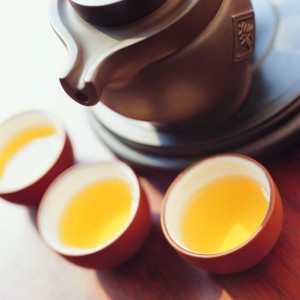
chinesetea1

Nonetheless, it’s safe to say that not all companies are being responsible. It is important to pay attention: tea companies felt the pressure to change because consumers made noise. With a wide range of resources now available to us, such a consumer reports, blogs, and online reviews, it is easier than ever to access more information on everyday products. Unless we consumers read product labels, and speak up when something does not add up with a product, there will never be anyone to make the changes that should be made.

We always have choices; there are plenty of alternatives to teabags on the market: tea balls, strainers, infusers ... find out what suits you best, and use the product that fits with your lifestyle.

Posted by Jessica on August 7th, 2009 No Comments

Go to the Head of the Class With Smart School Supplies

Aaahhh…September is right around the corner.  September signals summer slowly winding to an end, and for many adults, signals a renewed sense of purpose.  I think many of us “grown-ups” regard September as a kind of “New Year” as we are so used to associating this month with the start of a new school year.  So, in the spirit of my pseudo holiday, I have decided to take on a September New Year’s Resolution - I hereby resolve to send my sons back to school with PVC-free school supplies.

pvcfreebanner1

PVC, polyvinyl chloride, has been notoriously deemed the “poison plastic” for good reason.  Polyvinyl Chloride (PVC) is unique among plastics because it contains dangerous chemical additives used to soften or stabilize it. These harmful chemicals include phthalates, lead, cadmium, and/or organotins. One could argue that no other plastic contributes to the release of as many reproductive health toxicants than PVC.  PVC’s lifecycle is one of the largest sources of dioxins in our environment.  Exposure to dioxin has been linked with birth defects, decreased fertility, inability to carry pregnancies to term, lowered testosterone levels, decreased sperm counts, and decreased testis size.  Furthermore, several studies have detected measureable amounts of dioxin in women's breastmilk.

Additionally, PVC is responsible for the consumption of over 90% of all phthalates worldwide.  Phthalates must be added to PVC in large quantities – and can make up to 60% of the final product by weight.  Over 5 million tons of phthalates are used in vinyl every year, and more than 80 million tons of phthalates are estimated to be contained in the stock of PVC products now in use in buildings and other applications.  Exposure to phthalates has been linked to reproductive problems including shorter pregnancy duration, premature breast development in females and sperm damage and impaired reproductive development in males.

You may be thinking to yourself, “Yes, PVC is bad, but what on earth does PVC have to do with school supplies?”  Parents across the country are getting ready to stock up on binders and lunchboxes, and while it’s easy to know the healthiest foods to pack in those lunchboxes, many parents are not aware of the toxic plastic used to make them.  In fact, the average child’s character-themed backpack is filled with supplies and materials made from toxic PVC. Lunchboxes, binders, vinyl backpacks, and even art supplies are frequently made out of PVC.  (more...)

Posted by Heather on August 5th, 2009 1 Comment

Intoxicating Toxins

061608-shower-curtain-12

Not so long ago, I used to LOVE that new shower curtain smell. You know the one I mean. I remember inhaling so deeply, that I’d sometimes get a bit dizzy. Now I know that the intoxicating smell I once enjoyed was actually TOXIC – and perhaps reaping havoc with my health and reproductive system. In fact, according to the Center for Health, Environment and Justice new laboratory testing found that those innocuous-looking vinyl shower curtains can release over 100 chemicals into the air, some of which can damage the respiratory and reproductive systems, and even cause cancer. (And I thought mold and mildew were the culprits!) The good news is that safer PVC-free curtains are widely available. So, if it’s time to replace that grungy old shower curtain or liner but you’re worried about bringing toxic chemicals into your home, check out this FREE resource: Pass Up the Poison Plastic - The PVC-Free Guide for Your Family & Home. In addition to providing some alternatives to PVC-based products, this comprehensive guide includes info about other plastics to avoid (such as polycarbonate and polystyrene) and tips for what you can do to shop smarter.


Five Easy Steps to Begin Going PVC-Free in Your Home


1. When remodeling your home, use PVC-free building materials.

2. Buy PVC-free baby products and toys for your children, grandchildren, and relatives.

3. Replace your PVC shower curtain.

4. Shop for PVC-free electronics.

5. Don’t buy products that are packaged in PVC.


Just remember: bad news comes in threes, don’t buy PVC.


From Pass Up the Poison Plastic - The PVC-Free Guide for Your Family & Home


Posted by Barrie on May 13th, 2009 No Comments